#SpaceWatchGL Opinion: Space Workers Wanted: Digital Education for an Expanding Sector
Publicado: 23 agosto 2024 a las 2:00 pm
Categorías: Artículos
[responsivevoice_button buttontext=”Dale clic para escuchar” voice=”UK English Female”]
By Nicolas Peter and Igor
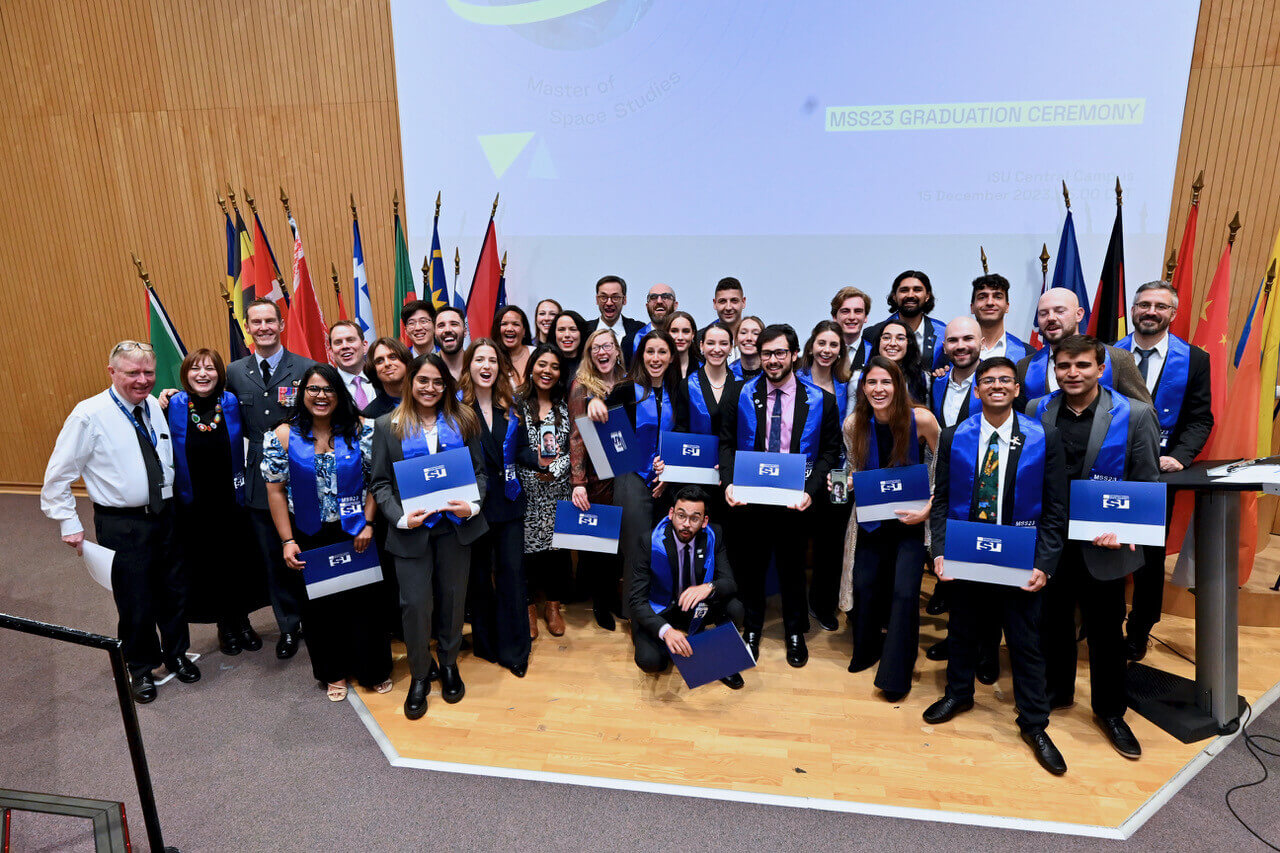
The space economy is undergoing a remarkable transformation, with projections indicating a staggering growth from 630 billion USD in 2023 to 1.8 trillion USD by 2035, as recently reported by the World Economic Forum. The rapid growth of the space economy is not just a result of its increasing activity, but also an expansion of its reach into various sectors while attracting more, and more diverse, stakeholders. This explosive growth is creating a significant demand for a larger and more diverse workforce. As the industry continues to expand, it needs talented individuals with expertise in fields like engineering, science, telecommunications, and policy among others. The growing space economy will require more businesses and workers to support research, development, manufacturing, and operations throughout the entire space value chain. Despite the growth of dedicated university degrees touching space disciplines, there is a gap in talent in the sector which traditional academic programs are still struggling to fill. To meet these demands expressed by the space sector, attracting and developing a skilled labour force is crucial for the continued expansion of the industry as illustrated by the primary results of the Horizon Europe Astraios project.
Given this urgent need for a skilled workforce, including upskilling and re-training, digital education offers an immediate and effective solution to prepare individuals for careers in the space sector and related industries while promoting innovation and economic growth. The benefits of digital education align perfectly with the needs of the evolving space economy. It is more sustainable and accessible–reducing the need for travel, materials, and other associated costs—its content is more adaptable to the rapidly changing industry, as is its schedule according to the constraints of current professionals. Although earlier forms of digital, or distance, education often precluded the development of interpersonal relationships, modern platforms encourage participants to build bridges within the space sector through peer-to-peer interactions. This accessibility ensures that people from diverse backgrounds, regardless of their geographical location or economic situation, can acquire the necessary skills. The education sector itself is also growing significantly, mirroring the expansion of the space economy, as it works to keep up with the economic development associated with new technologies. This growth is particularly remarkable for digital education platforms with the global e-learning market expected to reach almost $450 billion by 2026. This growth in digital education infrastructure implies the development of a strong foundation and an ideal platform for training the next generation of space industry professionals. By leveraging digital education, we can develop a skilled workforce capable of driving innovation and growth in the space economy, ensuring a steady supply of qualified individuals ready to take on future challenges and opportunities.
Digital education supports the modern need for continuous learning and adaptation in a rapidly changing world.
Moreover, as we advance further into the 21st century, the way we approach life, work, and education is undergoing a fundamental shift. The traditional model of completing education before entering the workforce is being called into question. As an alternative, education must become a continuous, lifelong endeavour that seamlessly integrates with our careers and personal growth so as to remain relevant in a world characterized by accelerated innovation. This is where digital education proves to be indispensable. It offers unmatched flexibility and accessibility, allowing individuals to learn at their own pace and from the comfort of their homes/offices without needing to relocate or significantly disrupt their lives or careers. Digital education supports the modern need for continuous learning and adaptation in a rapidly changing world. By providing ongoing education opportunities, it enables individuals to stay current with technological advancements and industry trends, thus maintaining their relevance and competitiveness in the job market.
Within this context of space workforce needs and technological innovation, digital education stands out as the tool to both address the immediate need for a skilled workforce in the growing space economy and aligns with the broader, long-term shift towards lifelong learning, on-the-job training, and continuous professional development. These two compelling justifications highlight why embracing digital education is essential for anyone looking to thrive in the dynamic and expanding space industry.
In more concrete terms, we can list some key reasons why digital education is essential for the space sector:
Accessibility – Digital education breaks down geographical and financial barriers, allowing individuals from all over the world to access high-quality education. This is particularly important for those who may not have the means to travel or take extended time off from work.
Flexibility – The ability to learn at one’s own pace and schedule is a significant advantage of digital education. It accommodates different learning styles and paces, ensuring that all learners can benefit from the course.
Interdisciplinary Learning – The space sector is inherently interdisciplinary, requiring knowledge from various fields such as engineering, science, policy, and business. Digital education allows for efficient integration of diverse topics and perspectives, providing a holistic understanding of the sector.
Continuous Learning – Digital education supports lifelong learning by offering courses that can be taken at any stage of life, de-risking education choices, or facilitating career shifts and personal growth.
Such benefits have of course already been recognized by major universities for many years. Management and business degrees can be earned through distance-learning solutions but given space education more generally remains on the periphery of university programs, even fewer institutions have recognized neither the need nor the opportunity provided by accessible education for space.
However, a recent collaboration between two well-established institutions dedicated to cutting-edge education seeks to bridge this gap and help fill the growing talent vacuum generated by the expanding space sector. The first, the International Space University (ISU) founded in Massachusetts and headquartered in Strasbourg, France brings over 36 years of experience in educating space professionals while the second, the School of Disruption, provides extensive expertise in the creation of innovative learning solutions designed to adapt to the kinds of needs imposed by rapid economic and technological growth such as those seen in the space sector.
Since 1987, ISU has been at the forefront of providing continuing education programs on a global scale, encompassing a diverse, interdisciplinary, intercultural and international audience. The Space Studies Program (SSP), Master of Space Studies (MSS), and Southern Hemisphere Space Studies Program (SHSSP) immerse participants in a rich academic curriculum, providing a comprehensive education from the world’s leading experts. ISU’s global alumni network of 5,800 people from over 110 countries, the overwhelming majority of which currently work in the space sector, is a testament to its reach and influence in the global space ecosystem. Recognizing however that in-person courses will be insufficient to meet the growing workforce needs, ISU has recently launched their effort to incorporate digital education into its offer.
Its recent partnership with the School of Disruption (SoD) marks a significant milestone in space education. This collaboration combines ISU’s legacy of excellence in space education with SoD’s innovative digital learning approach. SoD’s expertise in creating on-demand e-learning content complements ISU’s offerings, therefore providing learners with the practical skills essential for success in current and future markets.
In March of this year, ISU announced its “Tracks to Space” course which is a unique program designed to make space education accessible to a broader audience. The course caters to individuals with varying levels of space knowledge, including those with a simple, general interest, to established professionals seeking to expand their expertise, and even welcomes newcomers exploring the subject. The course is structured to be engaging, interactive, and highly informative, thereby ensuring that learners gain valuable insights and practical knowledge. The curriculum offers a comprehensive overview of the space sector, ranging from the most fundamental topics (such as historical and practical considerations) to more complex subjects like space applications, human performance, and policy and law. A more comprehensive list of the course curriculum can be found on the School of Disruption website.
As the industry continues to expand, it needs talented individuals with expertise in fields like engineering, science, telecommunications, and policy among others.
Of course one of the key advantages of “Tracks to Space” is its flexibility. Learners can access the course material at any time, allowing them to fit their studies around their personal and professional commitments. Additionally, the course is designed to be completed within a few weeks or months, making it an efficient and effective way to gain new skills and knowledge.
However the program is also intended to serve as a point of entry for ISU’s other programs such as MSS, SSP, and SHSSP for those seeking to further develop their professional skill set while simultaneously providing access to individual and personalized mentorship from real-life space experts. Through “Tracks to Space,” learners will interact with ISU faculty members, gaining a taste of the interdisciplinary education for which ISU is renowned. This interaction serves as an excellent assessment tool for both the learners and ISU, helping prospective participants determine their readiness for more advanced programs while allowing ISU to identify promising candidates who can thrive in its immersive educational environment.
However, the human aspect of ISU and SoD’s new program extends even to performance assessment and content personalization to meet an individual’s need; an aspect which is often severely lacking from other distance learning platforms and the most often cited barrier to effective digital learning. The ISU faculty assess participants’ responses to exam questions for each section, tracking which sections of the course are well-understood and which require further clarification. ISU uses this data-driven approach to continuously refine course content, making it more effective and responsive to the needs of learners. By identifying patterns and trends in participants’ performance, they can pinpoint specific areas where additional resources or explanations are needed, ensuring that the course remains comprehensive and user-friendly.
Yet just as the space sector continues its rapid expansion and evolution, ISU and SoD have also pledged their commitment to continually evolving and improving the learning experience for their participants. Their vision includes implementing innovative features that will make the course more accessible and engaging for a global audience, leveraging advanced technologies to support personalized learning, and continuously monitoring and refining the course content based on participant feedback and performance.
Among the primary goals in the near term is to make “Tracks to Space” accessible to a broader audience by including subtitles in multiple languages. Although English is recognized as the primary language for space, the rapid expansion of the industry has led to the integration of individuals from other sectors where English was not necessarily a prerequisite. Although the language of Shakespeare is likely to remain dominant for the sector in general and for international collaboration in particular, expanding available educational content to other languages will enable more individuals to help fill an immediate industry workforce deficit. This initiative will have the additional benefit of helping non-native English speakers to fully grasp the content, participate effectively with minimal stress, and gain the confidence to pursue further studies in the space sector.
As ISU looks to the future, the commitment to providing a world-class education in the space sector remains strong. “Tracks to Space” is designed to inspire and empower individuals to explore the vast opportunities in the space industry. By expanding accessibility and leveraging new technologies for personalized learning, ISU is setting the stage for a new era of space education.
Source
#SpaceWatchGL Opinion: Space Workers Wanted: Digital Education for an Expanding Sector
Deja un comentario